
Under the floor
Hampton Roads, VA
Powderpost Beetles in Hampton Roads
Tiny exit holes and flour-fine powder in crawl space joists are the classic powderpost beetle signature, and Hampton Roads crawl spaces suit them perfectly.
Determination
Lyctinae and Anobiidae families
Pinhead-size round holes and talc-fine powder. The question is whether it is still happening.
- Common name
- Powderpost Beetles
- Report status
- Reportable on NPMA-33
- Structural risk
- Damages framing
- Settled by
- Frass age
- Lives in
- Crawl space
- Field indicators
- 3 listed
Description
Powderpost beetle larvae feed inside hardwoods and softwoods for months or years, then chew their way out, leaving pinhead-sized exit holes and a talc-fine wood powder called frass. The species we find in local crawl spaces favor damp wood, which is why the humid, unvented crawl spaces of coastal Virginia are their stronghold. Flooring, joists, and subfloor in older homes are the usual evidence sites.
They are among the five wood destroying insects reported on Virginia real estate inspections, and the usual question is whether an infestation is active or ancient history.
Field indicators
Evidence, in the order it is usually found
All of it is left behind rather than seen live. The larvae feed inside the wood for months or years, then chew their way out.
- Pinhead-size round exit holes in joists, subfloor, or hardwood flooring
- Fresh, light-colored powder sifting from holes or piled beneath them
- Powder the consistency of flour, not gritty like drywood termite pellets
The determination that matters
Active infestation, or evidence of an old one
Old exit holes are permanent, so every previously infested board looks alarming forever. This is the read that decides whether anything needs to be done at all, and we will put the answer on the report either way.
Reads as historic
Old evidence
- Old, dark hole interiors
- No powder sifting from the holes and none piled beneath them
- Dry wood on a moisture reading
Monitoring is a legitimate answer, and we will say so on the report.
Reads as active
Live evidence
- Fresh, light-colored powder sifting from holes or piled beneath them
- Light-colored hole interiors
- Damp wood, since larvae need moisture
Treated with a borate application to exposed wood, and the crawl space gets dried.
Ground section
Why the crawl space is their stronghold
Drying the crawl space is half the treatment, so the section worth reading here is the one between the vent line and the wet ground under it.
Vented crawl space air
Humid, and not going anywhere.
Joists and subfloor
Where the larvae feed for months or years.
Damp ground
The source of the humidity above it.
Grade level
Where it lives in the structure
The evidence sites in older homes are consistent: flooring, joists, and subfloor. Everything else in this column stays dark.
Roof and attic
Not found here
Living space
Pinhead-size round exit holes in hardwood flooring in older homes.
Exterior wall, trim, and deck
Not found here
Sill, band, and floor framing
Exit holes in joists and subfloor, with powder piled beneath them.
Crawl space
The stronghold. Humid, unvented crawl space wood is what the local species prefer.
Soil and grade
Not found here
Consequence
What it costs to ignore
The cost is not fast, but the wood does not recover on its own either.
Permanent record
Old exit holes are permanent, so every previously infested board looks scary forever, which makes an unread plate expensive at closing time.
Long neglect
In long-neglected cases where structural sections are honeycombed, our repair crew replaces what is beyond saving.
The driver
Because larvae need moisture, a crawl space that stays damp keeps the conditions in place for the next generation.
Corrected condition
A crawl space that is no longer damp
Drying the crawl space is half the treatment, so this is half the answer. A sealed, dehumidified space takes the moisture the larvae depend on out of the picture.
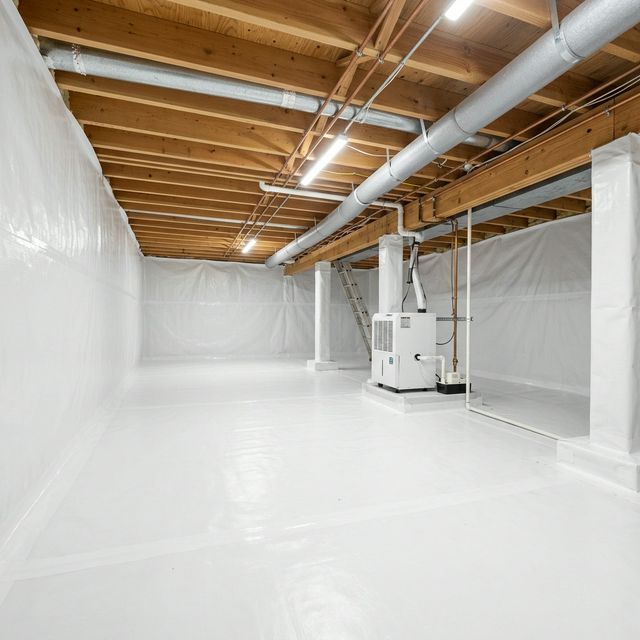
- 1 Floor framing overhead
- 2 Sealed wall liner
- 3 Dehumidifier
- 4 Liner over the ground
Correction
What we do about it
Date the evidence first. Everything after that depends on the answer.
- Fresh frass, hole colour
Date the evidence
Fresh frass and light-colored hole interiors suggest activity; old dark holes with no powder are usually historic.
- Borate on exposed wood
Treat what is active
Active infestations in crawl space wood are treated with a borate application to exposed wood, and because larvae need moisture, drying the crawl space is half the treatment.
- Honeycombed sections
Replace what is gone
In long-neglected cases where structural sections are honeycombed, our repair crew replaces what is beyond saving.
Not sure what you are looking at? Take a photo, save a sample if you safely can, and call 757-583-4444. Identification comes first, and it is free.
See also
Related services
Answered already
Powderpost Beetles: quick answers
The inspection found old beetle holes. Do we have to treat?
Not if the evidence is inactive. Old exit holes are permanent, so every previously infested board looks scary forever. We check for fresh frass and test moisture; if the wood is dry and the powder is old, monitoring is a legitimate answer, and we will say so on the report.
Powderpost Beetles
Think you have powderpost beetles?
Send a photo or book an inspection. We will identify what it is, what it is doing, and what fixing it takes.
757-583-4444Monday to Friday, 9 AM to 5 PM. Norfolk, Virginia Beach, and all of Hampton Roads.