
Below grade / on the ground
Why Your Crawl Space Insulation Is Falling Down
Batts on the dirt are not a stapling problem. They are a humidity gauge reading full. What failed, what it signals, and the replace-or-remove call.
The ten second answer
Your fiberglass drank the air.
Summer air arrives carrying dew points in the 70s, the batts absorb it, the material gains weight, the facing and staples give up, and gravity finishes the job.
In a vented coastal crawl space, summer air arrives carrying dew points in the 70s, the batts absorb that moisture, the fiberglass gains weight, the paper facing and staples give up, and gravity finishes the job. The insulation did not fail at random. It failed on schedule.
Fallen batts are not the problem. They are the gauge that finally got your attention.
Why do batts fail under coastal houses specifically?
Because the design asks vents to dry a space that our climate uses them to soak. This is the vented crawl space paradox: open vents in a Hampton Roads July pull in air wetter than the air already under the house, and it condenses on every cool surface, insulation included. Fiberglass holds water like a towel and insulates poorly once damp, so the material sags, pulls away from the subfloor, and eventually lets go. Rodents pile on, tunneling through batts for nesting material and dropping sections wholesale. Between the two forces, most fiberglass in a vented crawl space near the coast is living on borrowed time from the day it is stapled up.
Grade level
Treat fallen batts as an instrument reading: something below your floor has been over the line for a long stretch.
Is fallen insulation a problem or just ugly?
Both, but mostly it is a message. Batts on the ground mean the space has been running humid for a long stretch, and humidity that heavy does not stop at insulation. The same moisture swells subfloor, feeds fungus once wood readings cross into the 20s, and creates exactly the damp conditions subterranean termites hunt for. So the moisture side deserves a look before anyone touches the insulation side. There are also comfort stakes, since gaps in floor insulation show up as cold rooms in January, but comfort is the cheapest thing on this list.
Should I just push it back up?
You can, and it will fall again, because re-hanging wet fiberglass into humid air repeats the experiment with the same variables. Worse, saturated batts pressed against framing hold moisture on the wood and can hide what is happening behind them, which is one reason inspectors pull suspect insulation back. If a section is soaked, moldy, or full of rodent evidence, it is debris now, not insulation.
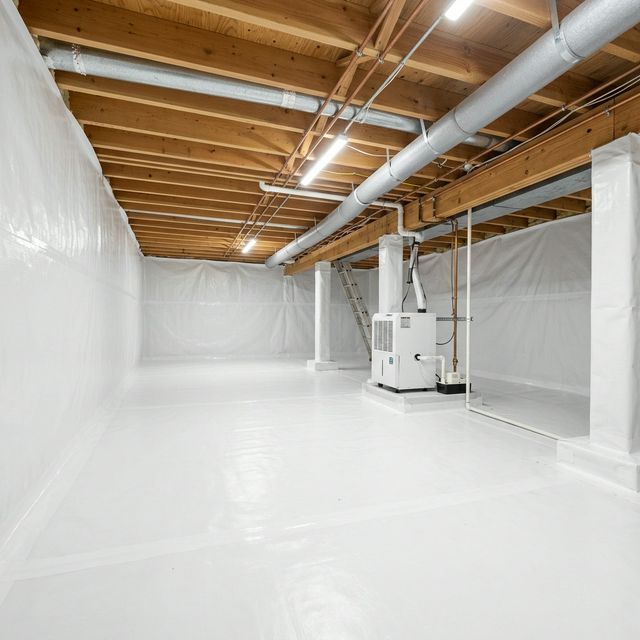
- 1 Batt pulled from subfloor
- 2 Damp joist face
- Failure driver
- Absorbed water
- Wood flag line
- 20 percent
- Second driver
- Rodents
Replace or remove: the honest version
It depends on the space you are putting it back into, and anyone who answers without asking about moisture first is guessing.
Case 1Chronically damp vented space
Replacing batts buys a few tidy years At best. The fix that lasts starts with drainage, ground vapor, and humidity.
See standing water and moisture control generally.
Case 2Headed for encapsulation
The strategy changes shape Seal and condition the space, and insulation moves to the perimeter walls instead of sagging between joists.
Covered on the encapsulation page.
Case 3dry space, one bay
Replace like for like Where a plumbing leak since fixed took out one bay, this is fine.
Rarer here than homeowners hope.
Who does this kind of work?
Insulation under a house is rarely a standalone project, which is why we handle it as part of moisture control and encapsulation scopes rather than as a drive-by staple job: removal of failed material, correction of the moisture that killed it, then insulation appropriate to the design the space ends up with. If rodents did the demolition, the pest control side closes that loop too. Suspect the batts are telling you something bigger? When a problem is suspected, the inspection is free. Call 757-583-4444, weekdays 9 AM to 5 PM.
Inspection request
Insulation hanging under your house?
Tell us what you are seeing and we will confirm a time window. Inspections are free when you suspect a problem.
757-583-4444Monday to Friday, 9 AM to 5 PM. Norfolk, Virginia Beach, and all of Hampton Roads.